

Educational market analysis only. Not financial advice.
The oil week starts quietly. In early Monday trading, Brent was about 0.7% below Friday's close. WTI barely moved. That calm is exactly what this piece is about. The price is quiet. The danger is not.
The crude is back. The diesel is not.
Oil prices fell for two weeks in a row. Gulf crude exports are close to normal again. Many analysts read this as relief. I think that is a mistake, and an easy one to make. I made it myself while preparing this piece.
The HormuzEye Risk Monitor stays at 95 out of 100, Severe, as the new week begins. Ships are still being attacked. And the real shortage has moved somewhere the oil price does not show.
A quick reminder of what the number means. It is an editorial judgment of disruption risk. It is not a 95% chance that the Strait closes, and it is not a price forecast.
The attacks are real
On 13 November, INTERTANKO (the International Association of Independent Tanker Owners) counted 14 attacks on ships so far in November, mostly by drones and missiles. At least one seafarer was killed. Several were injured. That is a count for the month, not for a single week.
On 11 November, UKMTO (United Kingdom Maritime Trade Operations, the Royal Navy's shipping advisory service) reported a tanker hit by an unidentified projectile in the Strait. The crew were safe.
Iran claims more tankers have struck mines. Be careful with that. Reuters could not immediately verify these claims. Over the weekend, Iran's Islamic Revolutionary Guard Corps repeated them, saying more tankers had hit mines and caught fire. Reuters could not independently confirm that either. INTERTANKO said one earlier attack may have involved a floating device, but stated plainly that this does not mean there are mines in the Gulf. It also warned that old footage is circulating online as if it were new.
UKMTO rates the maritime threat in the region as severe. That matches our own reading.
A bomb on a hull, a drifting device and a mined shipping lane are three very different problems. A mined lane would change everything. We have no evidence of one.
The detours are targets too
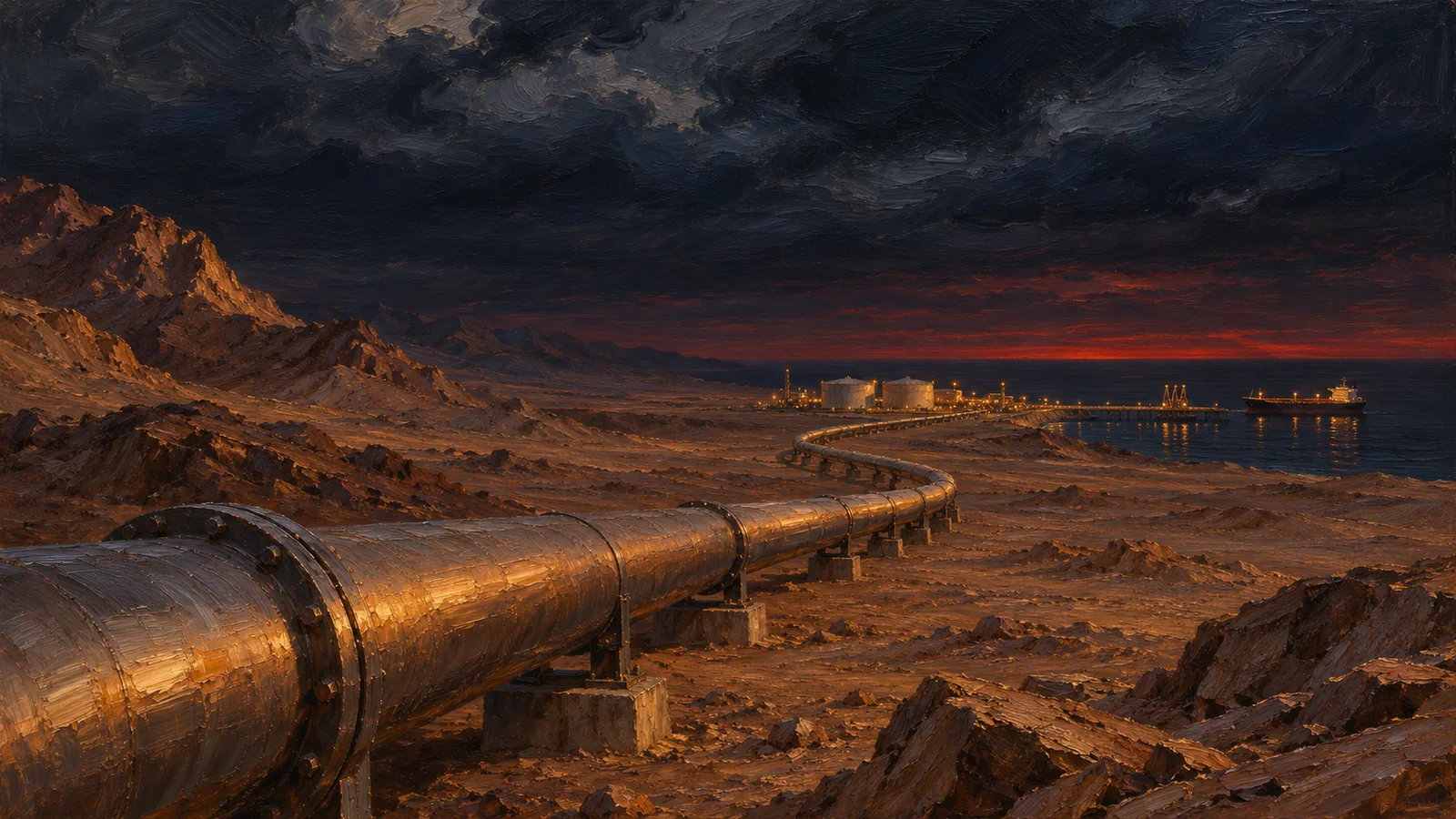
Saudi Arabia sends about four million barrels a day through its East-West pipeline to Yanbu on the Red Sea, around Hormuz. On 9 November that pipeline was hit near Medina. A limited fire was put out. Nobody was hurt and the oil kept flowing.
That last sentence matters. The attack showed the pipeline can be reached. It did not take capacity away. In September, a drone attack forced a temporary shutdown. This time was different.
Reuters also reported an attack on navigation equipment on Didamar island in Oman. Maritime sources expected little effect on shipping.
The bottleneck has moved
Here is the heart of this week's assessment.
Think of oil as a chain. You pump the crude. You ship it. You refine it. You deliver the fuel to the pump. For decades, crude was the weak link. When crude got cheaper, diesel got cheaper. That was as normal as one plus one.
Not anymore. Today there is enough crude. What is missing is refining.
The International Energy Agency (IEA) reported on 13 November that Gulf crude exports reached 82% of their prewar level in October. But exports of refined products and LPG (liquefied petroleum gas) were still at about half. European diesel fell 11% from early October, yet at close to $180 a barrel it remains 77% above prewar. The IEA calls tight product supply the overriding concern for consumers.

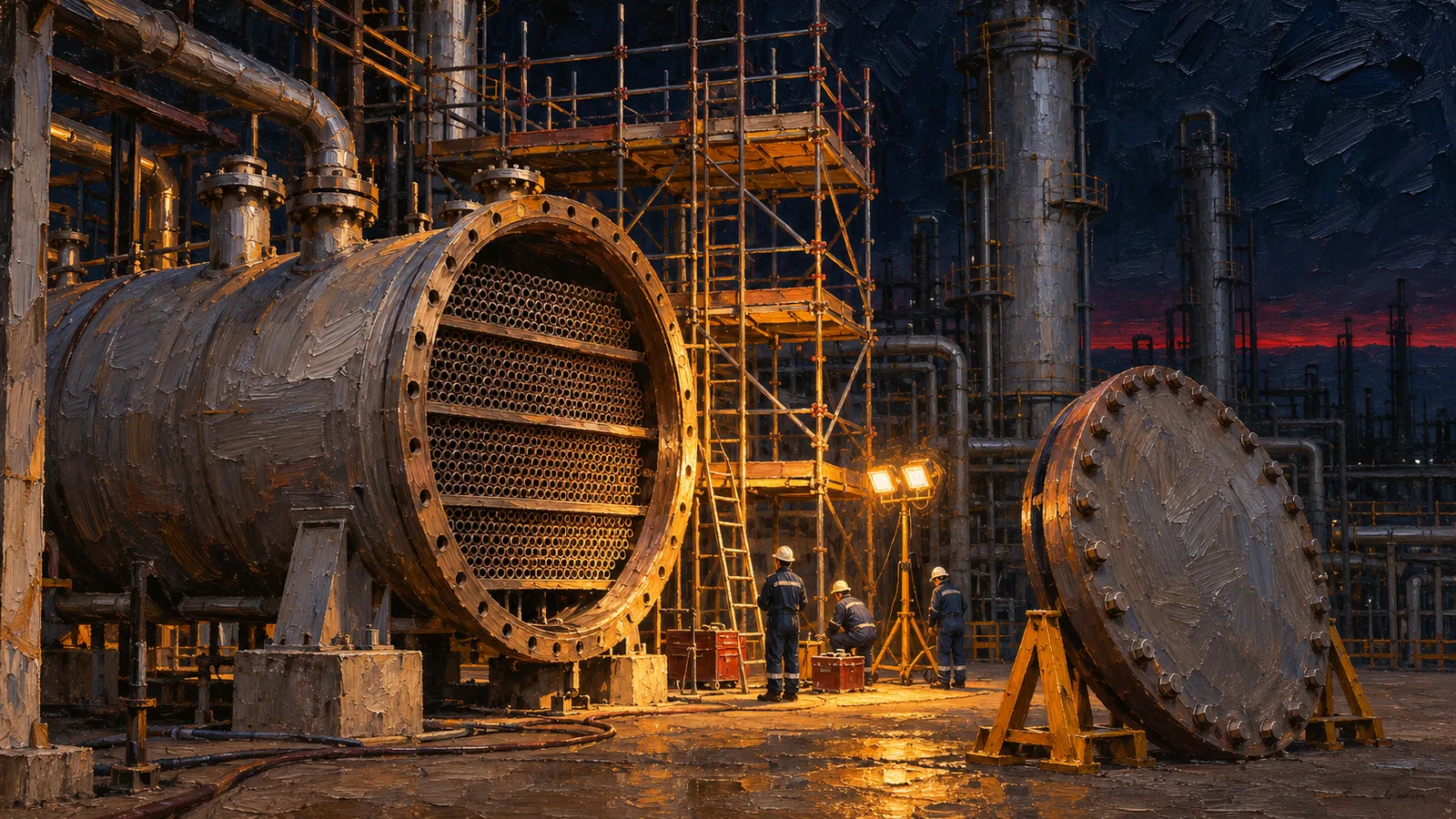
Why is crude back while fuel is not? Crude is like a tap. You can turn it back on quickly, and Saudi Arabia and the UAE (United Arab Emirates) have pipelines that avoid the Strait. A refinery is a factory. Around 20 Gulf refineries were attacked during this war. A damaged refinery needs repairs, checks and a careful restart. That takes months. Producers have also chosen to ship crude first, because refineries remain exposed to drones.
And the Gulf is not the only problem. Ukrainian drone strikes have disrupted about 30% of Russia's refining capacity, Reuters reported. Europe had little room to absorb this. Around a quarter of EU (European Union) refineries have closed over the past 20 years, according to the European Commission. The United Kingdom lost two in 2025: Grangemouth, which could no longer compete, and Lindsey, whose owner went bankrupt. They closed because refining did not pay. A year later, refining pays more than almost anything in energy. That is a painful irony.
Why cheap crude will not save you at the pump
When diesel is scarce, its price is not set by what it costs to make. It is set by what buyers will pay to get it. Europe, China, Japan, Korea, the Americas: everyone is bidding for the same cargoes.
And many buyers cannot stop. You can skip a weekend drive. The truck bringing food to your supermarket has to leave every morning, whatever diesel costs.
So here is a thought experiment, not a forecast. If crude fell to $40 tomorrow, diesel would not have to move. The refiner would simply keep the difference as a bigger margin. In theory, the same holds at $10.
Extreme? Perhaps. But oil markets have surprised us before. In April 2020 a WTI (West Texas Intermediate) futures contract went negative, closing near minus $37 a barrel, because storage was full. When one link in the chain breaks, prices do things everyone thought impossible. The IEA calls this war the largest supply disruption in the history of the oil market. Expect strange things.
What the oil price does tell us
Brent settled on Friday at $95.84 a barrel. WTI, the main United States benchmark, closed at $88.56. Both fell about 2.5% over the week. Monday's first hours brought little change.
That fall reflects real progress in crude. It does not tell you whether a ship gets through tonight. And it no longer tells you what you pay at the pump. Watch the refineries, not the crude price.
Why 95, and not 97
Last time we named an attack on Gulf oil infrastructure as a possible trigger for 97. The East-West pipeline was attacked. Why no move? Because the fire caused no interruption, and crude supply improved in the same period.
We are making the trigger more precise. What counts is material damage, lasting capacity loss or a clear drop in export reliability. This clarifies how we read the trigger. It does not change any past score.
At 95, repeated attacks are already built into the number. Raising it with every new report would count the same danger twice. The weekend's mine claims are a good example. Unconfirmed, they do not move the score.
This week: 16 to 22 November
Our central expectation is more of the same. Passage stays dangerous. Workarounds keep working, though exposed. Diplomacy continues without bringing normal traffic back.
On Sunday, Bahrain intercepted Iranian aerial attacks. On Tuesday, 17 November, Iran's foreign minister is due in Oman. INTERTANKO expects United States and Iran talks in Doha later this week, but sees a quick resolution as unlikely and further attacks as almost certain.
One piece of advice for this week: watch the diesel price, not Brent. If crude drifts lower while diesel stays high, the bottleneck is still there. That is the signal that matters.
| If this happens | We will |
|---|---|
| Attacks continue, workarounds hold, no operational agreement | Keep the score at 95 |
| Passage arrangements in place, attacks fall, observed traffic improves for several days | Consider a cut toward 92 or 93 |
| A major export route disrupted for a sustained period, significant verified shipping losses, or direct naval combat | Consider a rise toward 97 or higher |
These are conditions for review, not a formula. Gaps in AIS (Automatic Identification System) ship tracking data must not be mistaken for falling exports. We have no fresh insurance quote this week, so we make no claim about war risk premiums.
A meeting is a chance. A deal on paper is not a safe route.
Until then: 95, Severe, unchanged. The oil is flowing again. The fuel the world runs on is not.
Assessment as of Monday 16 November 2026. The Risk Monitor is an editorial index of disruption risk. It is not a probability model, an oil price forecast or a trading recommendation.
Sources
- INTERTANKO, advice for members, 13 November
- UKMTO warning 202-26
- Reuters, oil market close, 13 November
- Reuters, East-West pipeline, 9 November
- Reuters, Didamar island, 11 November
- IEA Oil Market Report, November 2026
- IEA, Sheltering From Oil Shocks
- MEED, refinery damage slows Gulf recovery
- Newsbase, Gulf refineries attacked
- OilPrice.com, crude prioritised over products
- Reuters via Euromaidan Press, Russian refining capacity
- European Commission via Europe Says, EU refinery closures
- FuelsEurope via Europe Says, UK closures 2025
- Reuters, Bahrain, 15 November
- Reuters via The Jerusalem Post, Oman visit
Disclaimer: HormuzEye provides educational and informational market analysis only. This content is not financial advice, not investment advice, and not a buy or sell recommendation. Oil markets are volatile and geopolitical events can change quickly. Always do your own research and consult a qualified financial adviser before making investment decisions.