
Educational market analysis only. Not financial advice.
The Market Is Breathing Out, But It Is Not Relaxed Yet
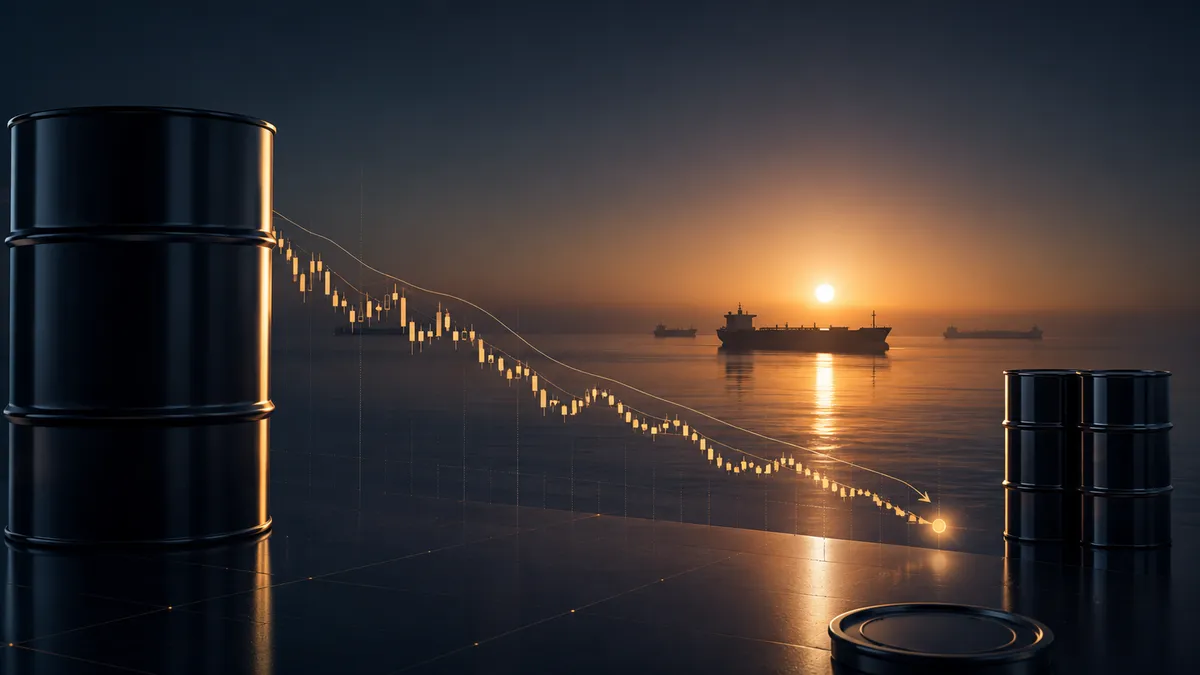
Oil prices have fallen sharply in recent days. After weeks of intense geopolitical tension around Iran, the Strait of Hormuz, and global energy security, the market is now pricing in a more hopeful scenario: more tanker traffic, fewer immediate disruption fears, and a possible path toward temporary diplomatic stability.

WTI is trading near $71-72, while Brent is hovering around $74-75. That is a sharp decline, close to 8% in five days, from the crisis-driven levels seen during peak Hormuz tension earlier this month.
At first glance, this looks like a simple story: the crisis cooled, oil prices fell, the market moved on.
But that may be too simple.
The better question is this:
Has the Hormuz risk premium disappeared, or has it only been reduced?
Why Oil Prices Fell So Quickly
The recent decline appears to be driven by three forces.
Tanker traffic improved. Partial resumption of transit through and around the Strait of Hormuz removed the most acute supply-shock fear. Roughly 20% of global seaborne oil trade flows through this single chokepoint. Even partial improvement sends a strong signal to markets.
Traders unwound the fear premium. During the escalation, oil prices included a built-in "Hormuz premium", compensation for worst-case scenarios: a blockade, insurance collapse, tanker seizures, or Iranian interdiction of Gulf shipments. As those tail risks looked less immediate, the premium was removed quickly.
Attention shifted back to fundamentals. With the geopolitical noise quieter, markets refocused on OPEC production signals, inventory data, and demand softness from China and Europe, all factors that were bearish before the crisis and remain bearish now. For context on how the underlying supply picture held up during the escalation, see our analysis of how Saudi Aramco built resilience against a Hormuz closure.
The Strait of Hormuz Is Still the Key Variable
For HormuzEye, the most important point is clear: the Strait of Hormuz remains the market's primary pressure point.
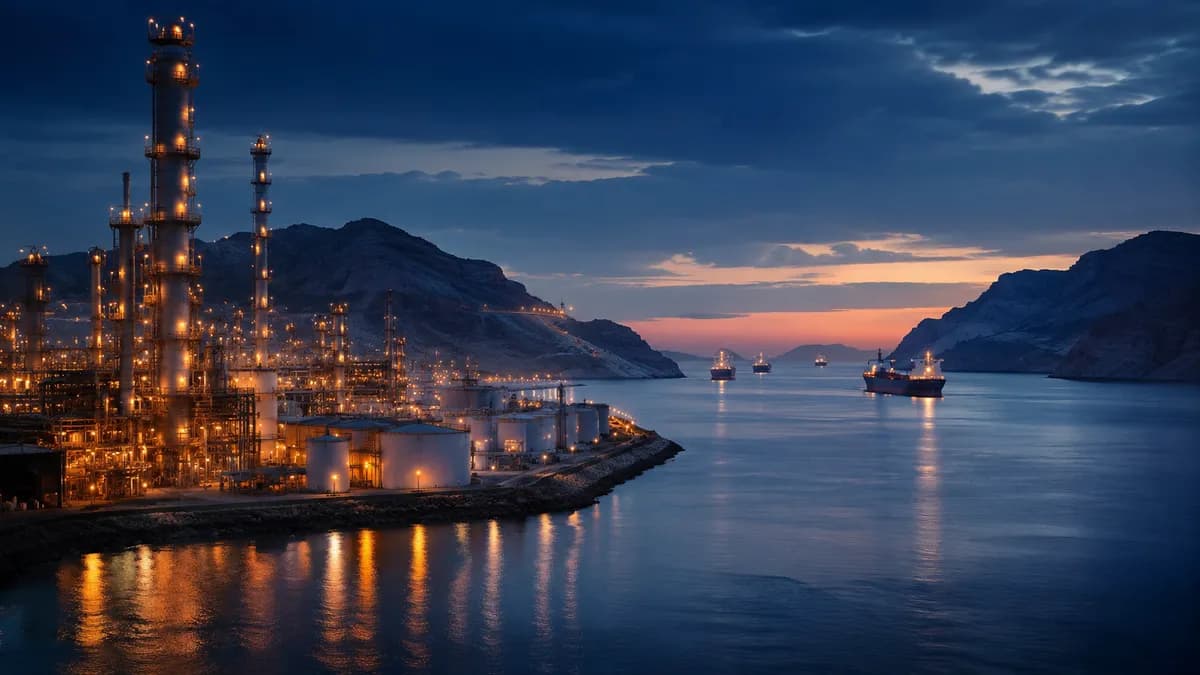
Even if the situation is calmer today, the route is not operating normally. Shipping companies are still weighing elevated war-risk insurance premiums, route restrictions, naval coordination requirements, potential Iranian registration fees, and the possibility of sudden policy changes from Tehran.
This creates a fragile middle ground: the market is no longer pricing a full crisis, but it is also not pricing a fully peaceful environment.
The risk premium is down. The risk itself is not gone.
A risk premium is what traders add to the price because they fear disruption. The actual risk, military tension, Iranian leverage over transit, diplomatic fragility, does not disappear when a few more tankers pass through. And in the Hormuz region, conditions can shift faster than the market expects. The Iran-US 14-point deal analysis we published earlier this month laid out just how fragile the current diplomatic framework remains.
Three Scenarios to Watch
1. Bearish Scenario: Flows Keep Recovering
Tanker traffic continues to normalize, the ceasefire holds, and Iran allows stable passage. Traders keep removing the geopolitical premium. Existing OPEC production levels add to available supply. In this scenario, Brent could drift toward $70 or below, not because demand collapsed, but because a fear premium that was never guaranteed to stay has been removed.
Watch for: Weekly tanker count data, Iranian statements on transit rules or fees, OPEC quota compliance signals.
2. Neutral Scenario: The Market Waits
Prices stabilize near current levels. Enough progress to prevent panic, but not enough certainty to price in a fully normal environment. The result is a choppy, headline-driven market, oil moving 2-3% on individual news events without directional conviction. The shape of the futures curve, whether it is in backwardation or approaching contango, will signal which direction the market is leaning. See our analysis of backwardation and contango signals in the current market for the framework.
When that headline-driven repricing tempts a chase, remember that speed is rarely the edge in oil markets.
Watch for: Brent-WTI spread, implied volatility in crude options, shipping insurance cost trends.
3. Bullish Risk Scenario: One Incident Changes Everything
This is not a demand-driven bullish scenario. It is a disruption scenario. A new tanker incident, a breakdown in negotiations, an Iranian warning about transit control, or a military escalation near Oman could bring back a large portion of the risk premium very quickly. The market has short memory for geopolitical risk once prices decline.
Watch for: Iranian naval activity near the Strait, U.S. and Gulf diplomatic statements, any reported tanker incidents in the wider Gulf region.
What Traders and Analysts Will Watch Next
The most important signals this week are not the daily oil price moves. The deeper indicators are:
- Tanker transit volumes through the Strait of Hormuz (weekly data)
- War-risk insurance premiums for Gulf shipping routes
- Iranian statements on registration, fees, or transit conditions
- Brent-WTI spread and futures curve shape (backwardation vs contango)
- U.S. Strategic Petroleum Reserve posture and diplomatic signaling
- OPEC+ production signals and quota compliance data
- Any military incident within 200 km of the Strait of Hormuz
Together, these signals will tell us whether the market is truly normalizing, or simply taking a pause before the next escalation.
The Bottom Line
The oil market has exhaled. The worst-case scenario, a prolonged Hormuz blockade, insurance collapse, and Gulf-wide supply shock, looks less likely today than it did two weeks ago. That is real, and the price reaction reflects it accurately.
But "less likely" is not the same as "impossible."
The Strait of Hormuz remains the single most important chokepoint in global energy markets. The premium traders built into the price during the crisis has largely been removed. The underlying risk has not.
For now, the market is watching and waiting. So are we.
For the latest traffic and SPR picture, see the Hormuz Update of 11 August.
For the live strait view, see the Strait of Hormuz status page.
The earlier premium unwind is mapped in Why Oil Prices Fell.
Disclaimer: HormuzEye provides educational and informational market analysis only. This content is not financial advice, not investment advice, and not a buy or sell recommendation. Oil markets are volatile and geopolitical events can change quickly. Always do your own research and consult a qualified financial adviser before making investment decisions.