
Educational market analysis only. Not financial advice.
Commercial traffic through the Strait of Hormuz remains severely restricted, with weekend data showing crossings falling to their lowest recent levels, while Monday brought confirmation that US strategic oil reserves have dropped below 300 million barrels for the first time in over four decades.
Data from MarineTraffic and Kpler reinforces what the trend has been signalling for weeks: despite a reported routing agreement between Iran and Oman and optimistic statements from Washington, there is still no meaningful return to normal commercial shipping through the strait.
Hormuz traffic falls to just six confirmed crossings
Confirmed vessel crossings during the weekend were:
- Friday 7 August: 15
- Saturday 8 August: 11
- Sunday 9 August: 6
That brings the three-day total to just 32 confirmed crossings. Routing remained heavily concentrated, including 17 movements through the Iranian Unilateral Scheme and 10 classified as Route Undetermined.
For comparison, before the current crisis, traffic through the Strait of Hormuz typically averaged roughly 130 to 140 vessel movements per day. Current visible traffic therefore remains only a small fraction of normal levels. For how that choke feeds freight markets, see the tanker investors opportunity analysis.
Windward's latest daily intelligence, using data through 9 August, similarly recorded only seven vessels during the previous 24 hours. AXSMarine data points the same way: an average of around thirteen crossings per day so far this month.
Bab el-Mandeb remains far busier, but not risk-free
The contrast with the Bab el-Mandeb chokepoint remains striking. Confirmed crossings there totalled 116 vessels during the same three-day period:
- Friday: 43
- Saturday: 37
- Sunday: 36
Traffic held relatively steady, although 12 dark transits over the weekend continued to highlight AIS visibility concerns, and Saturday recorded elevated risk activity, including 10 crossings involving sanctioned vessels.
The divergence between the two major Middle Eastern maritime chokepoints continues to widen. While Bab el-Mandeb remains heavily used despite regional security risks, visible commercial activity through Hormuz remains severely suppressed.
Diplomacy hardened again on Monday

Last week brought optimism: President Trump said Tuesday that a deal over the strait was close, and Iran and Oman reported reaching a framework agreement on shipping routes, pending final approval. Under the proposed plan, ships bound for the Persian Gulf would follow the Iranian coast, while traffic in the opposite direction would use Omani waters, giving both countries more control over the passage than before the war.
That optimism did not survive the weekend. Iran's Supreme National Security Council issued a list of demands the US must meet before any full reopening, including an end to the blockade, withdrawal of military assets from the region, sanctions relief, unfreezing of assets and compensation for war damages. Tehran also wants to charge tolls for passage, a demand US officials have rejected. Iranian officials stressed repeatedly that the Oman arrangement does not mean the strait is reopening, and Foreign Minister Araghchi said Sunday there are no ongoing negotiations between Tehran and Washington at all.
On Monday the positions hardened further. President Trump countered with his own compensation demand, saying Iran must pay victims' families and countries in the region, and described the US as only "semi-negotiating" with Tehran. Iran's Foreign Ministry said the same day that the blockade of the strait cannot be lifted through diplomacy. Meanwhile a tanker was reportedly targeted in the strait over the weekend, with the UAE blaming Iran.
On the water, little has changed. The practical picture remains one of:
- severely restricted visible commercial traffic
- continued US blockade enforcement
- persistent AIS gaps and dark shipping
- concentrated use of the Iranian routing scheme
- growing numbers of tankers waiting outside normal transit patterns
Shipping firms are clearly waiting for the fine print, and for evidence that vessels can pass without being fired upon, before returning in numbers.
US strategic reserves fall below 300 million barrels
The supply-side pressure is now clearly visible in US government stockpiles.
The Strategic Petroleum Reserve fell by 6.1 million barrels last week to 298.7 million barrels, dropping below the 300 million mark for the first time since January 1983, according to Department of Energy data released Monday.
The drawdown stems from the 172 million barrel release ordered in March in response to the Hormuz disruption, the largest crude supply disruption on record. The reserve stood at roughly 415 million barrels before the war began in late February; when the current release is completed, it will hold around 243 million barrels.
Notably, last week's draw was more than double the previous week's 2.8 million barrels, reversing what had looked like a moderating trend.
Questions about usable capacity add to the pressure: based on a May Government Accountability Office report, analysts estimate that over 100 million barrels in the reserve may not be available for drawdown due to aging infrastructure and cavern outages.
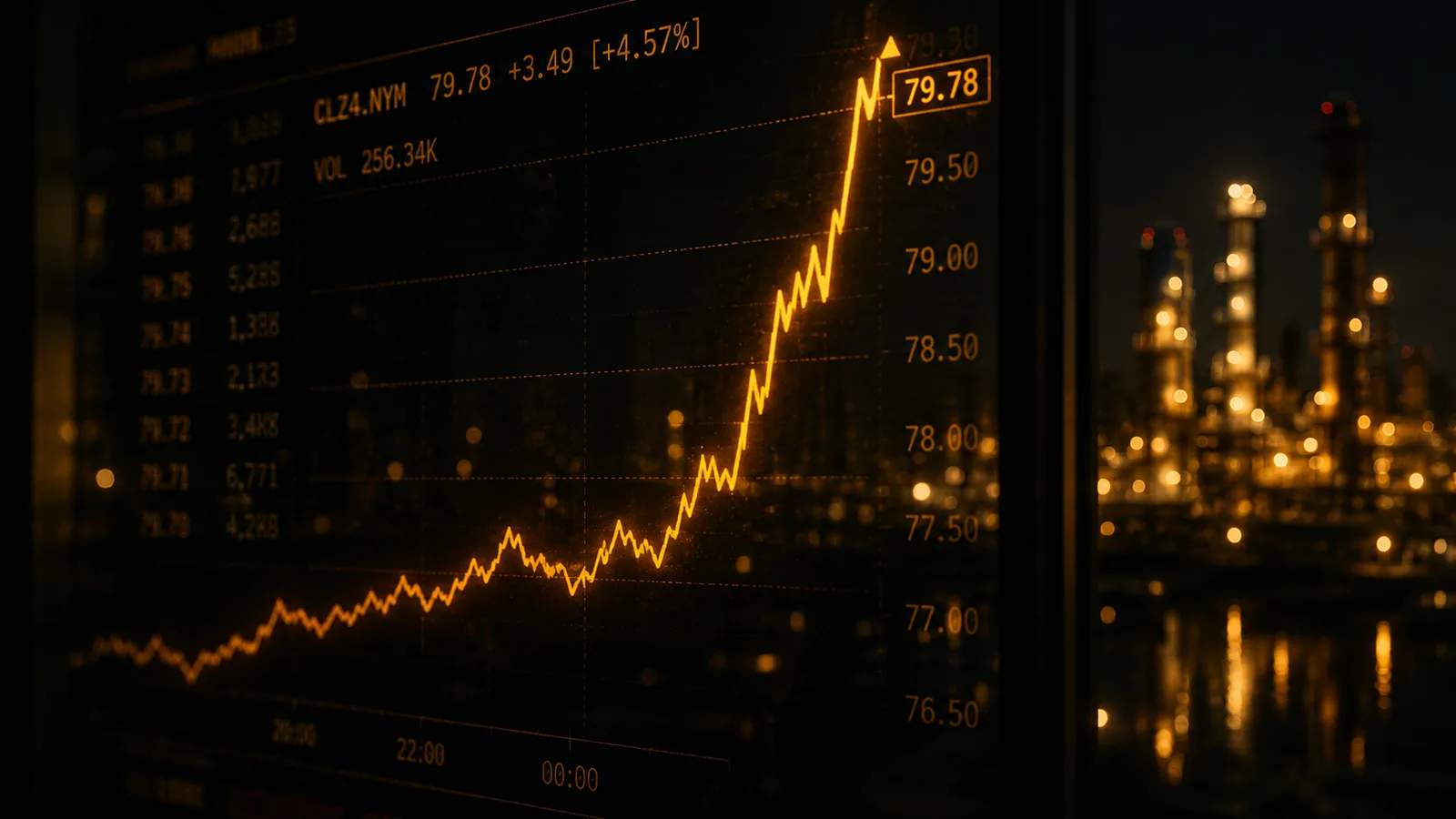
Markets took note. Oil prices jumped Monday as the SPR figure landed and hopes for a near-term arrangement between Washington and Tehran faded. For why chasing that kind of move is usually the wrong instinct, see Should You Trade the Oil Spike?.
The message from the reserve is the same as the message from the strait itself: the disruption is not being absorbed. It is being drawn down.
ADNOC Gas shows how Gulf producers are adapting
The disruption is also beginning to reshape long-term energy infrastructure decisions across the Gulf.
ADNOC Gas reported $665 million in Q2 net income, above its $400 to $600 million guidance range, supported by resilient domestic gas demand. The number still marks a 52% decline from the $1.39 billion earned in the same quarter last year, as the closure of Hormuz disrupted product liftings throughout the period. Gas supply from the Habshan facility, damaged in April, has recovered to 85%, ahead of the year-end target set in May.
Perhaps most telling is the company's own outlook. For Q3, ADNOC Gas guides for $600 to 800 million in net income assuming disruptions to maritime routes continue, and its full-year forecast of $3.5 to 4 billion holds only if maritime operations are fully restored by the fourth quarter.
In other words: one of the Gulf's largest gas producers is planning for a constrained Hormuz through at least the end of Q3. Producers are adapting operationally and building redundancy, while the physical movement of oil and LNG through the strait itself remains restricted.
Hormuz is not reopening yet
The key point from the latest data is straightforward:
Diplomatic progress has not yet translated into ships.
Visible commercial shipping remains at severely restricted levels under continuing military and political constraints. Dark shipping, concentrated routing through the Iranian scheme and persistent AIS gaps remain defining features of the current operating environment, while on land strategic reserves are being drawn down at an accelerating pace. The eight days that reset the Hormuz blockade still frame how we got here.
Until confirmed commercial crossings begin rising consistently, rather than appearing as isolated daily fluctuations, claims of a meaningful reopening should be treated cautiously. On how Brent still prices two conflicting stories at once, see Oil Priced Between Two Worlds.
HormuzEye will continue tracking vessel movements, dark shipping activity and diplomatic developments as the situation evolves.
For the latest assessment and historical transit data, see the HormuzEye Risk Monitor.
For the live Strait of Hormuz picture, see the Strait of Hormuz status page.
Sources
MarineTraffic and Kpler weekend traffic reports, 10 August 2026; Windward daily intelligence, 9 and 10 August 2026; AXSMarine transit data via ANP, 7 August 2026; US Department of Energy SPR data, 10 August 2026; ADNOC Gas Q2 results, 10 August 2026; reporting on negotiations between Iran and Oman, Iranian reopening conditions and US statements, 4 to 10 August 2026.
Disclaimer: HormuzEye provides educational and informational market analysis only. This content is not financial advice, not investment advice, and not a buy or sell recommendation. Oil markets are volatile and geopolitical events can change quickly. Always do your own research and consult a qualified financial adviser before making investment decisions.