

Educational market analysis only. Not financial advice.
A barrel of crude loaded on the Persian Gulf coast no longer comes with a simple shipping calculation. The buyer must ask whether a tanker can pass through Hormuz, what the insurer will charge, how long the voyage might take and whether a different export terminal offers a safer bargain.
Those questions are changing the Middle East's oil trade. For decades, the Strait of Hormuz was the natural exit for much of the region's production. The route was efficient, but its concentration of traffic left producers and refiners exposed to disruption at a single narrow passage.
The Iran war has turned that vulnerability into a daily commercial decision.
Saudi Arabia is moving crude across its territory toward the Red Sea. The United Arab Emirates is strengthening its export infrastructure at Fujairah, outside the strait. Iraq is examining ways to reach the Mediterranean through Syria.
Each option comes with costs and security risks. But together they suggest that access to export routes is becoming a competitive advantage in its own right.
The Middle East is beginning to compete not only over how much oil it produces, but over how reliably, quickly and cheaply it can deliver that oil to customers.
That distinction could reshape the region's energy trade long after the fighting ends.
A recovery that conceals a transformation
Oil shipments have recovered, but the routes carrying them have changed. According to the ship-tracking firm Kpler, crude exports from the Gulf region, excluding Iran, returned to their prewar level in September, at least 16.5 million barrels per day. The difference is where those barrels went. Before the war, 83% of the region's crude crossed Hormuz. In September, 40% left without crossing it.
The barrels that do cross the strait no longer travel the old way either. More than 70% of the crude that passed through Hormuz in August was transferred between tankers off the coast of the UAE or Oman, according to Kpler. A shuttle fleet of very large crude carriers (VLCCs) now carries oil from Gulf terminals to transfer points outside the strait, instead of sailing straight to the buyer.
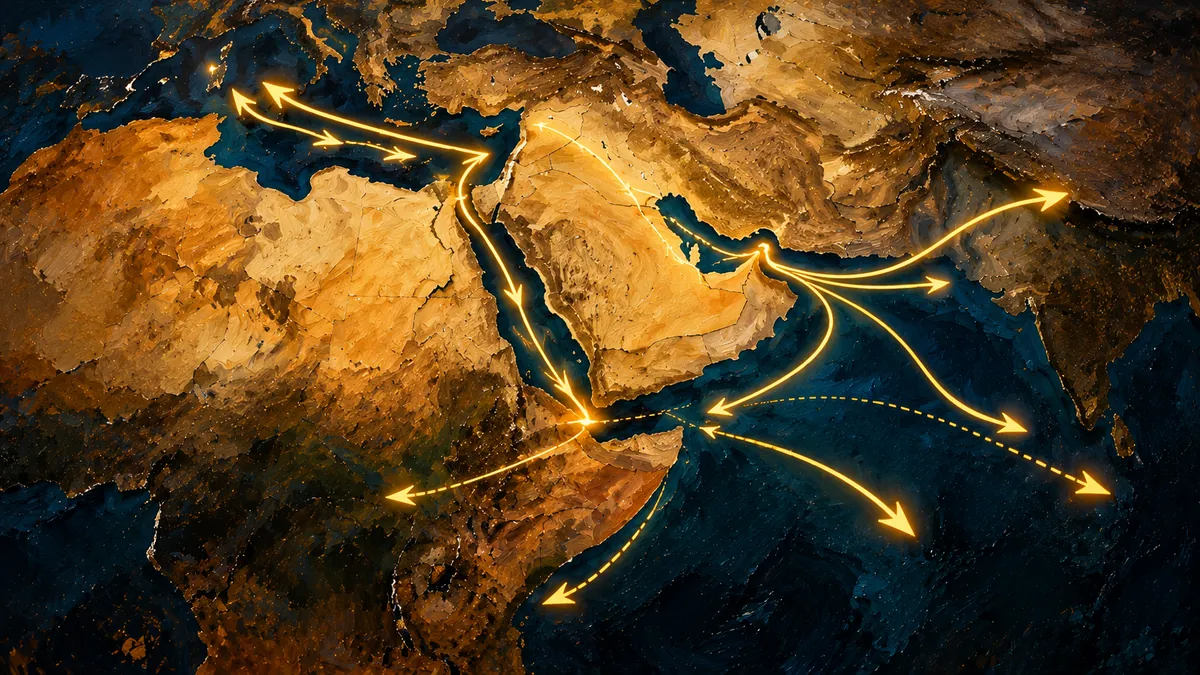
The distinction matters. A rebound in aggregate exports does not mean that the old trading system has been restored. More oil can reach buyers even while the traditional route remains impaired.
And the recovery remains fragile. In the week of September 28 to October 5, at least 12 attacks hit oil and gas tankers around the strait, the highest weekly total since the war began on February 28, according to maritime security sources cited by Reuters. Reuters reported on October 8 that vessel traffic through Hormuz had fallen to its lowest level in more than two months. Before that setback, Kpler data put crude shipments through the strait at about 10.3 million barrels per day for the week ending October 3, roughly 23% below a prewar baseline of 13.5 million.
Alternative outlets give producers options and offer buyers some protection against a single maritime chokepoint. But they create their own vulnerabilities. Pipelines have finite capacity, terminals can be targeted, and diversions may increase the distance to particular customers.
Saudi Arabia: the Red Sea becomes a commercial alternative
Saudi Arabia has the clearest established overland alternative. Its East-West Pipeline carries crude about 1,200 kilometres from the kingdom's eastern oilfields to Yanbu on the Red Sea, allowing exports to avoid Hormuz entirely.
The pipeline's nominal capacity is about 7 million barrels per day. What matters is how much of that is used, and how often it is interrupted.
Before the war, Yanbu exported only about 750,000 barrels per day. By the summer, it was handling roughly 4 to 4.5 million, according to the industry publication MEES (Middle East Economic Survey). Kpler estimates the pipeline was moving about 5.5 million barrels per day before it was attacked in September.
That attack showed both the value and the limits of the route. On September 10, a drone strike halted Yanbu loadings altogether. Saudi Arabia did not stop exporting. It sent its oil back east instead: Saudi crude crossing Hormuz rose from 0.7 million barrels per day in August to 2.8 million in September, according to Kpler. The bypass needed the very strait it was built to avoid.
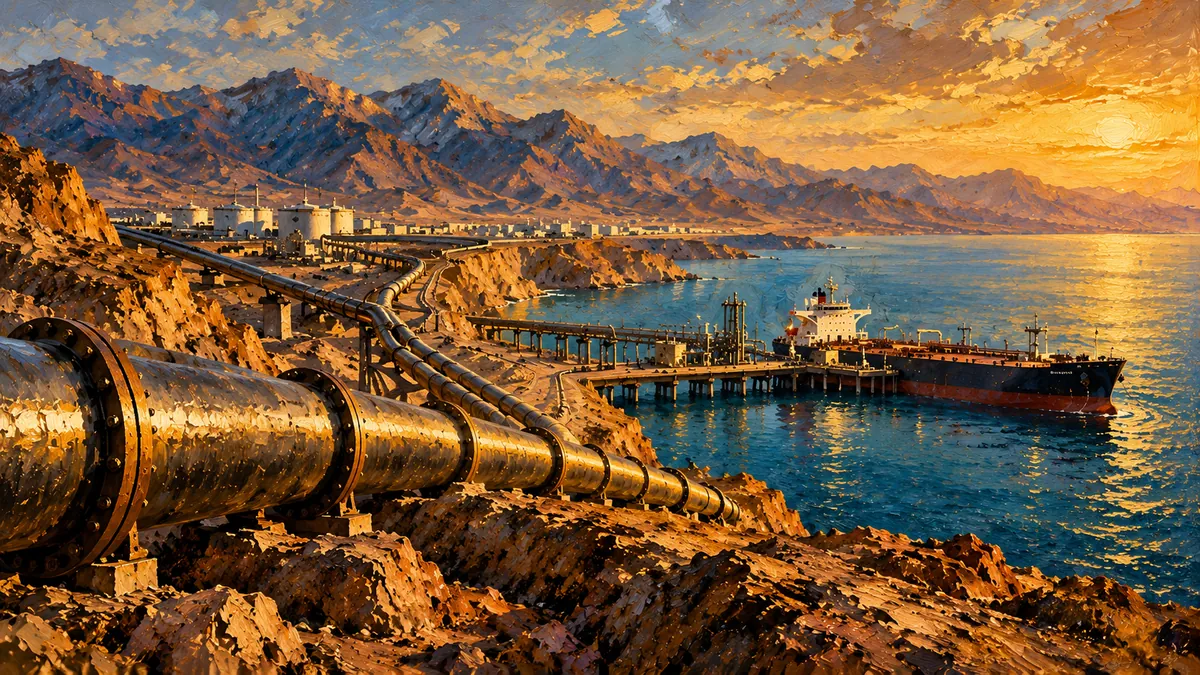
The line has since been restored. On October 6, Energy Minister Prince Abdulaziz bin Salman said it had reached a throughput of 5.8 million barrels per day.
The strategic question is no longer simply whether Saudi Arabia can move crude west. It is whether the Red Sea route changes the commercial terms on which Saudi barrels compete.
The kingdom's November pricing suggests it does. On October 5, Saudi Aramco unexpectedly cut the official selling price (OSP) of Arab Light crude for Asian buyers by $3 a barrel, to $5 below the Oman-Dubai average. It was the widest discount since June 2020, against market expectations of an increase. Heavier grades for Asia were cut by $5. At the same time, Aramco raised prices for northwest Europe by $3 a barrel, after resuming exports from Yanbu.
Asian refiners read the cut as compensation for record freight costs. For Europe, Yanbu cargoes avoid Hormuz altogether. Same crude, two routes, two prices.
Such pricing decisions reflect more than the headline oil price. Refiners compare the cost of the crude itself with freight, insurance, transit risk, delivery timing and refinery suitability. A barrel offered at a lower official price may still be less attractive if it is expensive or uncertain to transport.
The Red Sea outlet gives Saudi Arabia more flexibility, but it does not eliminate geopolitical exposure. Houthi forces claimed attacks on Aramco facilities in Yanbu in September, and this week they struck two Saudi airports. The route's value will depend on pipeline reliability, terminal security and conditions in the waters beyond Yanbu.
The UAE: turning Fujairah into a strategic advantage
The United Arab Emirates has spent years developing an export outlet on the Gulf of Oman. The Habshan-Fujairah pipeline allows Abu Dhabi crude to reach a terminal outside the Strait of Hormuz.
That investment is changing the balance of the country's exports. Market reporting indicated that UAE crude shipments through Hormuz fell by nearly 53% in July, while Fujairah handled roughly two thirds of the country's crude exports during the period.
Fujairah offers more than a loading point. Its storage, trading and bunkering infrastructure supports a wider maritime energy hub. For customers worried about delays or security in Hormuz, the ability to load outside the strait can carry commercial value.
Reuters reported in May that the UAE was accelerating work on an additional pipeline project to increase its ability to bypass Hormuz. Such investment signals that route diversification is becoming part of long-term energy planning rather than merely an emergency measure.
Fujairah remains within reach of regional threats. Moving a terminal beyond a chokepoint reduces one risk without removing the broader security problem.
Iraq: the Mediterranean option
Iraq faces a more difficult challenge. Much of its oil export system depends on southern terminals in the Persian Gulf, leaving the country particularly exposed when maritime traffic through Hormuz is disrupted.
One idea receiving renewed attention is a corridor carrying Iraqi crude west through Syria toward the Mediterranean. A functioning route could open access to European and other markets without requiring tankers to pass through the strait.
Industry interest in such routes is growing. Reuters reported on October 6 that oil executives are increasingly arguing that the world needs more export routes, not just more production.
For now, the Mediterranean option is a proposal, not an operational substitute for Iraq's southern export terminals. It would require financing, construction or rehabilitation, transit agreements and sustained security across multiple jurisdictions.
The interest is nevertheless revealing. Even the possibility of a western corridor can influence how Iraqi policymakers think about their future bargaining power and exposure to maritime disruption.
India: refiners follow the delivered price
The shift is visible in the decisions made by refiners thousands of kilometres from the Gulf. They are buying delivered crude, not simply a benchmark price.
India's imports of Middle Eastern crude were back at prewar levels in September, near 3 million barrels per day, according to Kpler. At the same time, reports in early October suggested that Indian refiners were reducing some Russian purchases for November as Russian prices rose and Chinese competition for those barrels intensified.
That does not amount to a permanent withdrawal from Russian oil. Refiners respond to changing discounts, shipping costs, payment conditions, crude quality and the reliability of delivery.
As Gulf producers restore export capacity and offer competitive terms, some barrels can become attractive again. This creates a direct contest between suppliers that are geographically distant but commercially linked through the economics of delivered crude.
The implication extends beyond India. Producers can no longer assume that historical customer relationships will hold if another supplier offers a better combination of price, security and logistics.
West Africa: the unexpected loser
The consequences reach well beyond the Middle East.
West African exporters such as Angola, Nigeria and the Republic of Congo face greater competition when Gulf crude becomes more accessible and aggressively priced. Longer voyages and record freight charges further weaken the appeal of West African grades to Asian refiners.
Market reporting on October 8 said West African crude was trading at its biggest discount to Dated Brent in more than a decade. Individual cargo indications vary widely by grade and loading date, but the direction is clear.
It illustrates the pressure on producers that compete for the same refinery demand. A disruption centered on Hormuz can eventually produce unexpected losers thousands of kilometres away as trade flows adjust.
Freight, insurance and the real price of a barrel
The price printed beside a crude benchmark is only the start of the calculation. For a refinery, the relevant figure is what the barrel costs after shipping, insurance, delays and the risks of the route are included.
Freight rates for the largest tankers have reached record levels this autumn. Aramco itself has looked at offering discounts on oil loaded off Oman to compensate buyers for those rates, according to people familiar with the matter cited by Reuters. When the world's largest exporter adjusts its prices for freight, freight has become part of the price of oil.
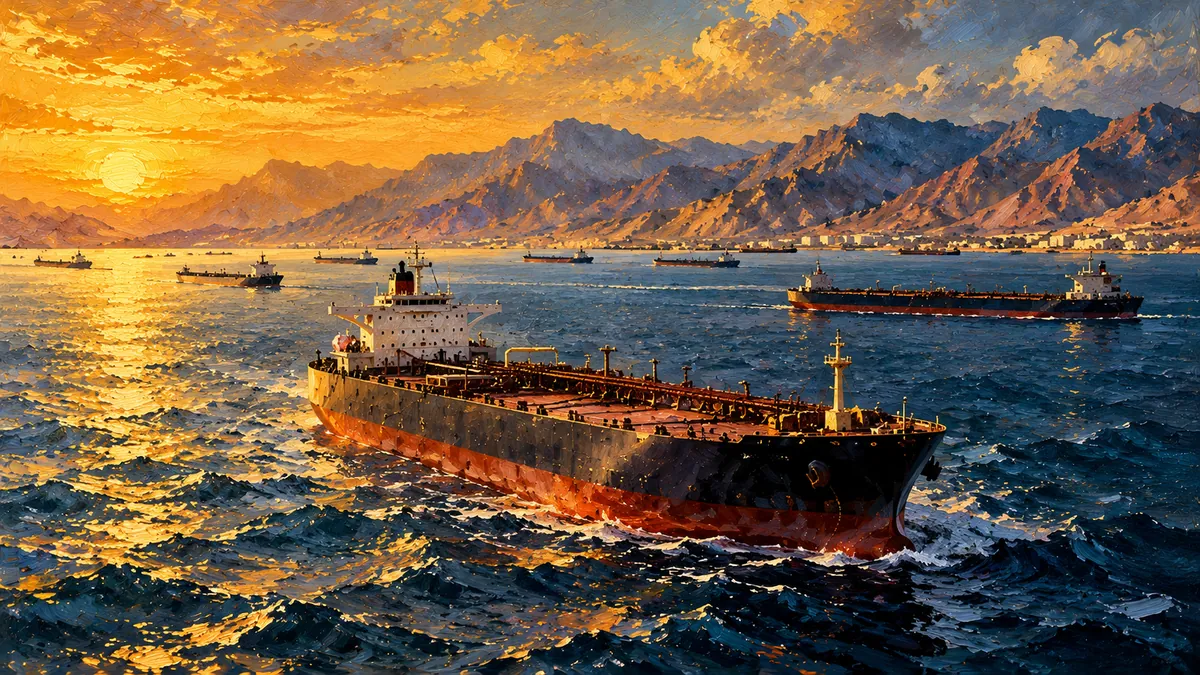
A refinery comparing two grades must consider the crude price alongside freight, insurance, port delays, security exposure and the cost of adjusting its operations. The lowest quoted barrel is not necessarily the cheapest barrel delivered to the refinery gate.
Brent, Dubai and Oman benchmarks will continue to anchor contracts and pricing formulas. Yet the premium attached to reliable access may become a more visible part of negotiations between producers, traders and buyers.
Hormuz is losing exclusivity, not importance
It would be a mistake to conclude that the Strait of Hormuz is becoming irrelevant.
The passage still carries enormous volumes of crude and petroleum products. Alternative pipelines cannot absorb every displaced barrel, and their terminals and onward shipping lanes face risks of their own. September proved it: when the East-West Pipeline went down, Saudi oil went back through the strait.
There is also a difference between crude oil and refined fuels. A recovery in crude exports does not automatically restore supplies of diesel, jet fuel or other products when refineries, logistics networks and product markets remain disrupted.
The region may therefore become more resilient in one respect and more complicated in another. Diversifying routes reduces dependence on a single chokepoint, but it also expands the network of pipelines, pumping stations, storage facilities and ports that governments and operators must protect.
Hormuz retains strategic importance. What is changing is the degree to which producers and customers are prepared to rely on it alone.
What happens after the war?
The end of the war is not yet in sight. Iran says the strait will stay closed until Washington accepts its conditions. This week, reports that the White House had asked the Pentagon for options to resume strikes pushed Brent above $105 a barrel on Thursday. On Friday, President Trump said there would be no strikes before the November 3 midterm elections, and prices eased back toward $102.
If the fighting ends and maritime security improves, some shipments will return to the most economical routes through Hormuz. Geography, established infrastructure and long-standing trade relationships will still matter.
But investments made during a crisis do not necessarily lose their value when the immediate danger recedes. Spare export capacity can act as insurance against future disruption, even if it is not used at full capacity every day.
That may influence long-term supply contracts, refinery procurement strategies, pipeline investment and the geopolitical value of ports far from the strait.
None of this guarantees a permanent reduction in Hormuz traffic. The outcome will depend on infrastructure costs, security conditions, commercial incentives and the durability of new routes. What has changed is that the alternatives are being tested under real pressure, rather than discussed only as contingency plans.
The HormuzEye assessment
The immediate battle is for market share. Saudi Arabia, the UAE and other producers want their barrels to reach customers despite the disruption. Buyers want dependable supplies at a competitive delivered cost.
The deeper change concerns access. A producer's strength is increasingly shaped not just by reserves and production capacity, but by its ability to offer multiple credible routes to market.
That competition is already visible in freight rates, official selling prices, refinery purchasing decisions and investment in pipelines and ports. A dependable route can make an otherwise more expensive barrel the better purchase.
Hormuz is not becoming irrelevant. It is becoming less exclusive.
And that may prove to be one of the most consequential changes to emerge from the Iran war.
The old question was how much oil could pass through the Strait of Hormuz.
The new question is how much of the Middle East's oil will still need to.
Sources
- Kpler, explainer on Gulf crude exports
- Euronews, October 5, Kpler export data
- Hellenic Shipping News, Kpler data on ship-to-ship transfers
- CNBC, October 6, Kpler Hormuz flows
- Reuters via US News, October 7, tanker attacks at weekly record
- Reuters, October 8, Hormuz transits at two-month low
- Al Jazeera, October 6, East-West Pipeline at 5.8 mb/d
- OilPrice.com, Kpler and MEES figures on Yanbu and the pipeline
- Reuters via gCaptain, October 5, Saudi November OSPs
- Reuters, October 6, alternative export routes
- Reuters, May 15, UAE pipeline
- Economic Times / Bloomberg, October 8, Indian crude purchases
- Nairametrics, October 8, West African crude discounts
- Anadolu, October 9, oil prices after Trump rules out strikes before midterms
- Quartz, October 8, Brent closes at $105.36
Disclaimer: HormuzEye provides educational and informational market analysis only. This content is not financial advice, not investment advice, and not a buy or sell recommendation. Oil markets are volatile and geopolitical events can change quickly. Always do your own research and consult a qualified financial adviser before making investment decisions.