
The ceasefire analysed here ended on 8 July, see Ceasefire Dead, Blockade Back for the current situation.
For the live Strait of Hormuz picture, see the status page.
For weekend traffic and SPR drawdowns as of mid-August, see the Hormuz Update of 11 August.
For how the blockade reshaped tanker economics, see Hormuz Crisis: Tanker Investors' Opportunity.
Ten days ago, oil was pricing a war. Today it is pricing a fragile peace.
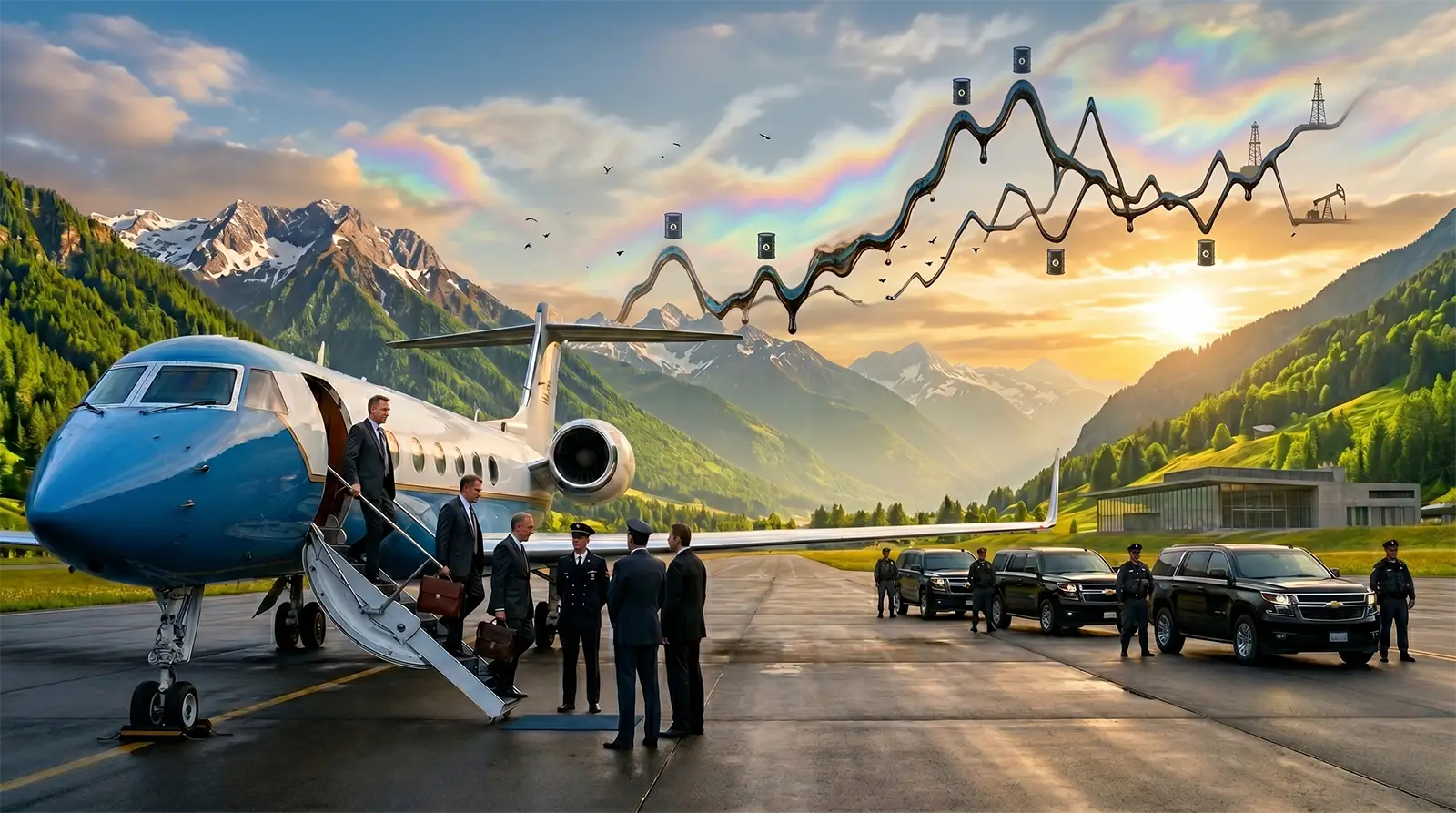
The turn came fast. A 14-point memorandum of understanding between Washington and Tehran, signed midweek by President Trump and Iran's President Pezeshkian, extended the ceasefire by sixty days, reopened the Strait of Hormuz and opened a negotiating track on Iran's nuclear programme. Then a deadly Israel-Hezbollah flare-up and an Iranian threat to re-close the strait briefly dragged the market back toward panic. Within forty-eight hours that reversed again: Israel agreed to hold fire, US Central Command dismissed Iran's closure claim, and Vice President JD Vance, whose trip had been postponed days earlier - landed near Lucerne to launch the next round of talks.
The Week That Changed Everything
It is worth replaying the sequence, because the price action only makes sense as a chain of reactions. The week opened with relief. Reports of a genuine US-Iran understanding took the edge off the fear premium, tankers began clearing Hormuz again, and crude drifted lower as traders started to treat the worst case as less likely.
Relief did not last. A sharp Israel-Hezbollah flare-up reintroduced the escalation narrative almost overnight, and an Iranian threat to re-close the strait put Hormuz risk back at the centre of the screen. For a moment the market behaved as if the previous days of calm had not happened - proof of how shallow the relief rally really was.
Then came the diplomatic twist. Vice President JD Vance, whose trip had been postponed only days earlier, departed for Switzerland to open the next round of talks with Iran. A single travel itinerary did what no data release could: it told the market that the negotiating track was still alive, and part of the risk premium came back out almost as quickly as it had returned.
The result is a market pricing fear and hope at the same time. Each headline pulls it one way; the next pulls it back. That tension, not any single fundamental, is what defines the tape right now.
So where does that leave the market? Cutting through the headline noise, the picture is clearer than it looks.
Where We Stand
Brent crude sits near $80 a barrel, down more than 23% in a month and back roughly where it traded before the war began in late February. The premium that pushed it toward $107 at the height of the crisis has almost entirely unwound. Tankers are clearing the strait again, by the US administration's own account, throughput is approaching pre-war levels, and Gulf producers are moving to restart stranded barrels.
In short: the market has finished pricing the supply shock and started pricing the peace. The question now is whether that peace is durable, and what holds prices up, or down, if it isn't.
Why a 20% Supply Shock Never Broke the Market
This is the part most coverage misses, and it's the key to everything that comes next.

At its peak, the Hormuz disruption removed something on the order of a fifth of global oil supply from the market, by several measures the largest physical supply shock in the history of the oil trade. And yet Brent never broke decisively above its 2022 highs, and is now falling. Why?
Two reasons, and both matter for the forecast.
First, the market was structurally soft to begin with. Before the war, 2026 was shaping up as a year of surplus: supply growth outpacing demand, with major banks pencilling in a fundamental Brent value closer to $60 than $80. The war didn't change that backdrop, it layered a fear premium on top of it. Remove the fear, and gravity pulls back toward fundamentals.
Second, the buffers did their job. A coordinated emergency release of more than 400 million barrels from strategic reserves added roughly 2.5 million barrels a day to the market over four months; floating storage, sanctions-evading flows and genuine demand destruction absorbed much of the rest. Crucially, those buffers are finite. They blunted the spike, but they have been partly spent, which matters enormously for the next round.
The takeaway: the war premium unwound quickly not because the risk was fake, but because the market underneath it was already long, and the cushions held just long enough.
The Chokepoint, Quantified
None of this means the fragility is gone. The opposite is true, and the numbers explain why headlines move this market so violently.
The Strait of Hormuz carries around 20 million barrels a day, close to 20% of global oil consumption and roughly a quarter of all seaborne oil trade. There is almost no way around it. The bypass pipelines through Saudi Arabia and the UAE together cover only about a quarter of normal flow, which leaves something like 14 million barrels a day structurally locked to that single 21-mile passage.

Spare production capacity offers little comfort. The IEA puts global spare capacity near 4.4 million barrels a day, but more than three-quarters of it sits inside the very Gulf states that export throughHormuz. The world's emergency supply cushion is parked behind the same door it would need to relieve.
That is the asymmetry traders are really pricing. Reopening the strait relieves the market fast. Re-closing it has almost no workaround. So even a rumour of closure carries genuine economic weight, and that is exactly why a single sentence from Tehran can move the tape by dollars.
A Market Trading Headlines
For now, this is a market trading the news flow rather than the balance sheet. The asymmetry around Hormuz means sentiment, not inventory data, sets the marginal price, and sentiment turns on three kinds of event:
- One missile strike can flip sentiment from relief to risk-off within a single session, as the Lebanon flare-up showed.
- One statement from Tehran, a threat to the strait, or a signal of restraint, can move crude by dollars before a single barrel is actually affected.
- One diplomatic trip, like the Switzerland talks, can quietly bleed part of the risk premium back out of the price.
Fundamentals have not gone away, the structural surplus is still the gravitational pull underneath everything. But while the chokepoint stays in play, headline risk dominates the tape, and the premium will keep expanding and contracting on each new line of news. The professional task is to separate the signal from that noise, which is where the next two sections come in.
What Comes Next
Three forward paths, in order of probability.
Base case, the peace holds (downside gravity). If Switzerland produces progress and shipping normalises, there is little to stop Brent drifting back toward fundamentals. That points to the high-$70s to low-$80s near term, consistent with the $80 fourth-quarter level Goldman Sachs now models. In this world, the bias is down, not up, the surplus reasserts itself.
Risk case, the strait re-closes (asymmetric upside). A breakdown in talks or a fresh Lebanon escalation that drags Iran back to the chokepoint is the scenario with no easy workaround. A spike back into triple digits cannot be dismissed, but with reserves and floating storage now partly drawn down, the buffers that capped the March spike would have less left to give. The same shock would likely bite harder the second time.
The date that matters, day 60. The framework runs on a sixty-day clock to convert an interim understanding into a durable nuclear deal. If that deadline passes without agreement, military action is explicitly back on the table. That single calendar date, not the daily headlines, is the real catalyst the market should be positioning around.
What Professionals Should Watch Next
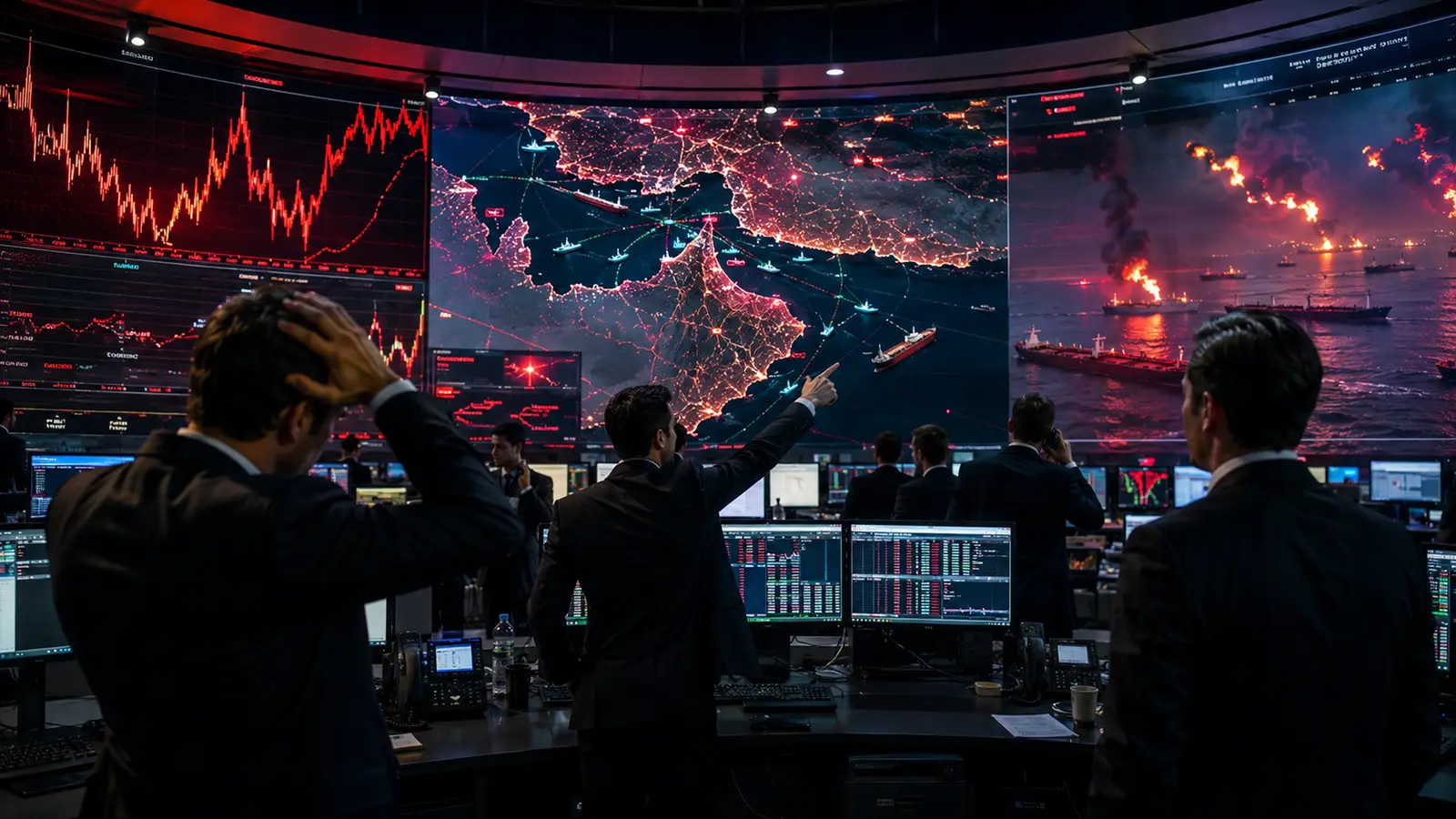
These are the signals worth more than any headline. Watched together, they tell you whether the market is genuinely repricing, or just reacting:
- Tanker traffic through Hormuz: is flow (per Kpler/Vortexa tracking) climbing back toward the ~20 million-barrel baseline, or stalling below it? Physical throughput is the cleanest test of whether the strait is truly open.
- War-risk insurance premiums: additional premiums as a share of hull value tend to move before crude does; a sustained drop confirms that underwriters, not just traders, believe the reopening.
- Brent time spreads and backwardation: easing backwardation and narrowing prompt spreads signal that physical players see the squeeze relaxing; a re-steepening warns the opposite.
- Export flows from Gulf producers: whether Saudi Arabia, the UAE and others are actually restarting stranded barrels shows how fast supply is normalising behind the chokepoint.
- Signals from the Switzerland negotiations: every read on the nuclear track and the sixty-day clock matters more than any single strike report; this is where the structural risk premium is ultimately set.
- The Israel-Hezbollah escalation path: the most likely trigger to pull Iran back toward Hormuz, and therefore the swing factor for the whole framework.
Bottom Line
This is not a normal oil market move. Prices are not tracking inventories, refinery runs or seasonal demand in the usual way, they are being pulled back and forth between two forces that have little to do with the balance sheet: the threat of escalation around Hormuz and the pull of diplomacy out of Switzerland. The underlying read still points downward, dragged by a structurally well-supplied 2026 with a fear premium that is almost fully unwound. But sitting on top of that base case is a uniquely asymmetric tail, a chokepoint with no real alternative and emergency buffers that are now thinner than they were in March.
That is what makes this market unusual: perception itself has become part of the price. A statement, a postponed trip, a single strike, each can add or remove dollars before any barrel changes hands. In that environment the professional edge is not predicting the next headline. It is reading what the market is actually pricing, in spreads, insurance, freight and flows - rather than what the headlines say it should be.
So the task is no longer forecasting a single number. It is positioning for a skewed distribution with a known fuse: sixty days of diplomacy, one irreplaceable waterway, and a market caught, for now, between fear and hope.
This is analysis, not investment advice. The ceasefire terms are contested and changing quickly; always cross-check official statements before acting.