
Introduction
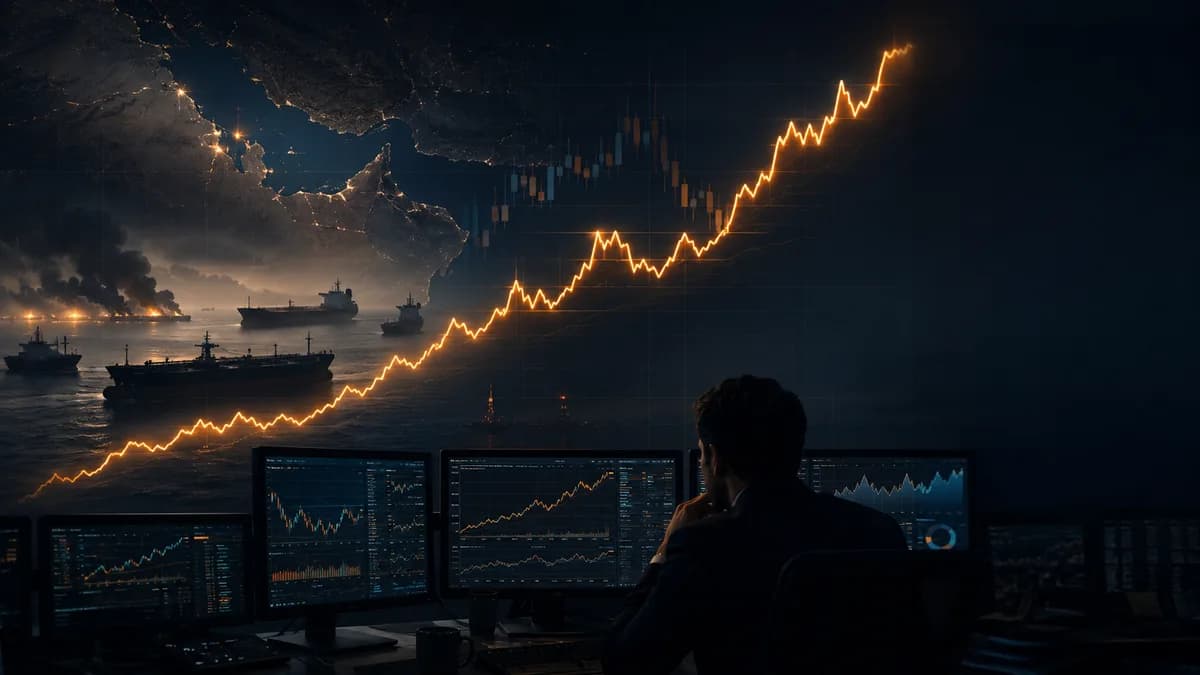
Picture a stretch of water just 33 kilometres wide at its narrowest point. On a normal day, more than 130 tankers glide through it, carrying roughly a fifth of the world's oil toward refineries in Rotterdam, Singapore, and beyond. In June 2026, that same stretch of water is nearly empty, and the global economy is feeling every missing barrel.
The Strait of Hormuz has been the pressure point of the world energy map for decades, but never quite like this. Since late February 2026, a US- and Israel-led war on Iran has turned the chokepoint from a theoretical risk into an active blockade. Iran declared the strait "closed" in early March, and traffic has collapsed to a fraction of its normal volume. A ceasefire was announced in April, broke down, was patched, and broke down again. As of early June, the guns have quieted but not gone silent.
This analysis cuts through the noise. The argument is simple: the oil market today is not being driven by supply-and-demand fundamentals in the usual sense, it is being driven by a geopolitical risk premium, and understanding that premium is the key to reading where prices go next. Below, we look at the physical reality on the water, the diplomatic chess game behind it, and the market mechanics that decide whether crude settles near $90 or spikes toward $150.
The Physical Reality, A Chokepoint Choked
The first thing to understand is that this is not a metaphor. Hormuz is genuinely shut to most commercial shipping.
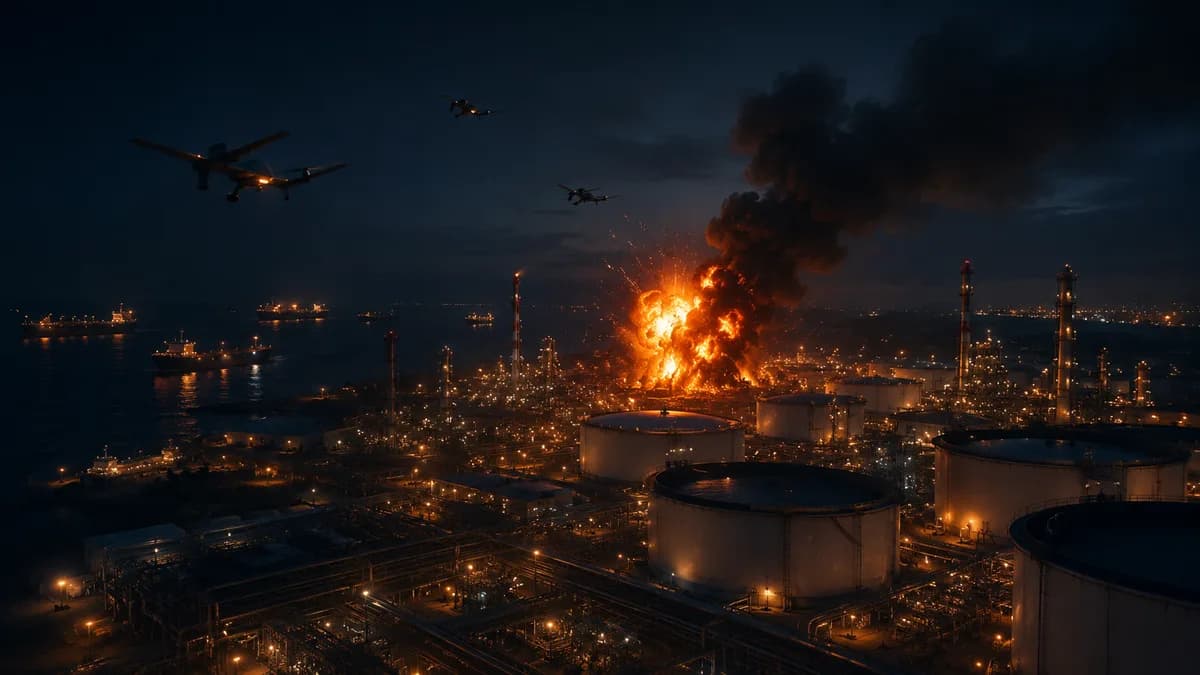
Before the war, the strait handled an average of around 138 tanker transits a day. Since the joint US-Israeli strikes that began on 28 February, that number has fallen to a literal handful, at times fewer than five vessels daily, many of them claiming links to China, Iran's most important economic partner. Iranian forces have mined parts of the waterway, attacked tankers with drones and fast boats, and jammed satellite navigation systems to make passage dangerous even for ships willing to try.
The price response was immediate and violent. Brent crude, which traded comfortably in the mid-$70s before the conflict, vaulted above $100 within days and touched levels not seen since 2022. At the peak of the panic in spring, futures pushed well into the $110-$118 range.
A quick explainer: a "chokepoint" is any narrow passage that a huge share of global trade has to squeeze through. Hormuz is the most important oil chokepoint on Earth because there is almost no way around it, the alternative pipelines (through Saudi Arabia and the UAE) can only carry a fraction of what normally moves by sea. When the strait closes, the oil from Saudi Arabia, Kuwait, Iraq, Qatar, and the UAE has nowhere to go.
That structural trap is why this disruption is different from a typical supply shock. It also sets up the question that matters most: how long can it last? For that, we have to leave the water and look at the negotiating table.
The Geopolitical Chess Game, A Truce That Won't Hold
If the physical blockade is the symptom, the standoff between Washington and Tehran is the disease.
The conflict has cycled through a familiar and exhausting pattern: escalation, ultimatum, partial ceasefire, fresh clash, repeat. A truce reached in April briefly sent prices tumbling more than 10%, but US and Iranian forces have since exchanged fire in the strait on multiple occasions, with each incident reigniting the risk premium. In recent days, Iran fired several rounds of missiles toward Israel and warned against further Israeli operations in Lebanon, which has become a key obstacle to any durable deal.
The diplomatic state of play as of early June: President Trump is pushing for a 60-day memorandum of understanding intended to freeze hostilities and open the door to broader negotiations over Iran's nuclear program. Trump has struck an optimistic tone publicly, suggesting the strait could reopen quickly if Iran signs, while privately, regional leaders are far less convinced. As one former US energy adviser put it bluntly, many in the Gulf now believe Iran will effectively control passage through Hormuz for the foreseeable future, regardless of what any agreement says on paper.
That gap, between the political theatre of "a deal is close" and the on-the-ground reality of a contested waterway, is exactly what keeps traders nervous. A handshake in front of cameras does not get tankers moving; insurers, shipowners, and crews do, and they remain deeply reluctant.
Which brings us to the part of the story most headlines miss: even with the strait shut, the market has mechanisms that can soften the blow.
The Market Mechanics, Why Prices Haven't Gone Vertical
Here is the puzzle. If a fifth of the world's oil supply is genuinely stuck, why is Brent hovering in the $90s rather than $200?
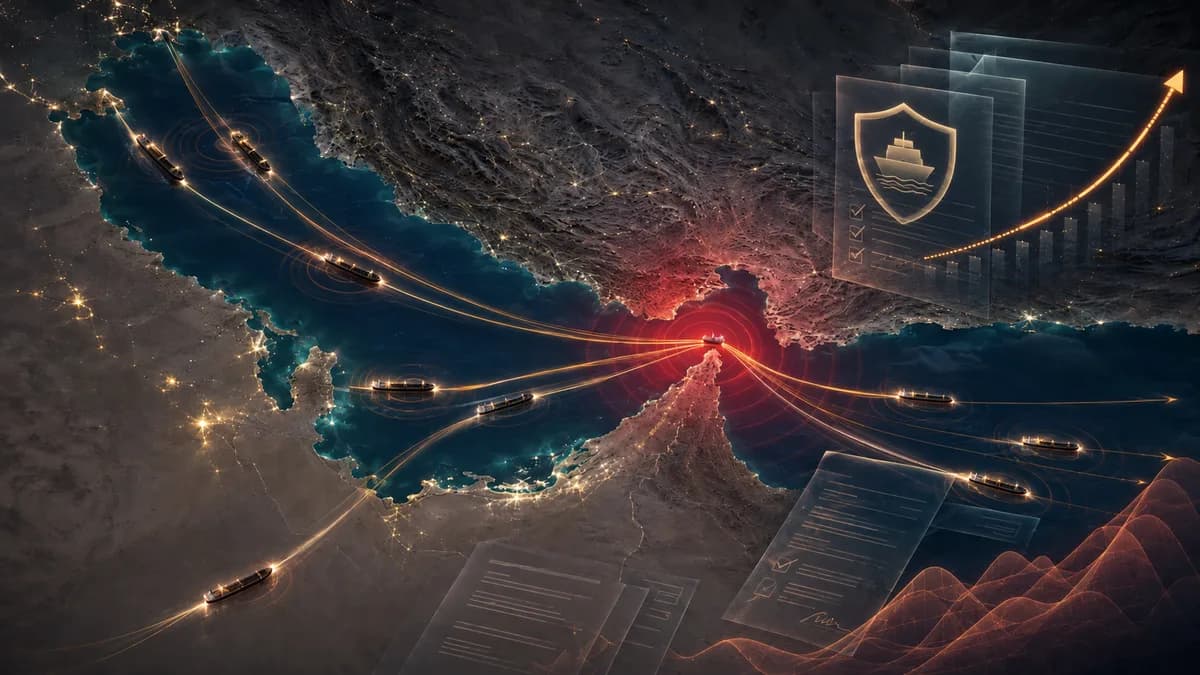
The answer lies in three buffers the market has leaned on.
First, drawdowns and inventories. Importing nations entered this crisis with strategic petroleum reserves and commercial stockpiles built up over years. Those buffers don't last forever, but they have absorbed a meaningful share of the shortfall so far.
Second, demand response. High prices destroy demand. Governments have rolled out conservation measures, the International Energy Agency has published guidance on remote working and public-transport use, and some countries have experimented with shortened work weeks to trim fuel consumption. Less demand means less upward pressure.
Third, and this is the counterintuitive one, OPEC+ kept opening the taps. Despite the war, the group approved another production increase for July of 188,000 barrels per day. There is a catch, though, and it is a brutal one: most of OPEC's spare capacity sits inside the Persian Gulf. If those barrels can't get through Hormuz, the extra quota is just a number on paper.
A useful example of how fragile this balance is came on 5 June, when an explosion briefly disrupted operations at Oman's Mina Al Fahal export terminal before they resumed. Oman sits outside the strait, one of the few Gulf-adjacent export routes that doesn't depend on Hormuz, so even a short hiccup there sends a jolt through the market. It is a reminder that the buffers are real but thin.
Challenges / Counterarguments
No honest analysis ignores the case against alarmism, so here are the strongest objections, and how they hold up.
“The market has already priced the worst, so prices will drift down.” There is real evidence for this. Crude fell sharply in mid-May when negotiations appeared to make progress, and analysts at major banks noted that investors were "pricing out" the catastrophic scenarios. The counter: every time talks have stalled, prices have snapped back. The de-escalation is being priced and then un-priced repeatedly, which is itself a sign of how unresolved the situation is.
“China and grey-market shipping will keep oil flowing.” Partly true. A trickle of vessels, many China-linked, still moves through. But a trickle is not a fifth of global supply, and the discount-and-detour economics don't scale to replace the lost volume.
“OPEC+ spare capacity will cap the price.” This is the most dangerous assumption, because that spare capacity is largely landlocked behind the very chokepoint that's closed. In a Hormuz-shut world, OPEC's safety valve is far weaker than the headline numbers suggest.
The sober conclusion: the downside case (gradual de-escalation, prices easing toward the $80s) and the tail-risk case (a prolonged hard closure pushing crude toward $150-$200, a scenario floated by several veteran analysts) are both live. The market is balanced on a knife's edge.
Practical Applications / Examples
What does this mean if you're not a hedge-fund commodities desk?
For households and drivers (Netherlands and the wider EU): elevated crude feeds directly into pump prices and heating costs, with a lag of a few weeks. Europe is structurally exposed because it imports diesel and refined products that partly originate in the Gulf, analysts have flagged the risk of diesel tightness specifically.
For businesses with fuel- or plastics-heavy cost bases: petroleum is an input far beyond the fuel tank, it's in plastics, packaging, and petrochemicals. A practical step is scenario planning rather than prediction:
- Map your exposure. Identify where crude prices touch your costs, directly (fuel, freight) and indirectly (materials, suppliers).
- Build two budgets. Model one around de-escalation (Brent easing to the low $80s) and one around a prolonged closure (Brent $130+). Don't bet on either, prepare for both.
- Lock in what you can. Where forward contracts or fixed-price supplier deals are available, certainty may be worth a premium in a market this volatile.
- Watch the leading indicators, not the headlines. Tanker-transit counts through Hormuz and ceasefire-compliance news move prices before the pump does.
For investors: treat single-day price swings as noise. The signal is the structural question, does Hormuz reopen with real, sustained tanker volume, or not? Everything else is commentary.
Conclusion
The story of oil in June 2026 is the story of a single strait. Three threads run through it: the physical blockade of Hormuz that has throttled a fifth of global supply; the diplomatic stalemate in which a ceasefire is announced, broken, and renegotiated on a loop; and the market buffers, reserves, demand cuts, and OPEC+ output, that have so far kept prices in the $90s instead of sending them to the moon.
Three takeaways to hold onto:
- Prices today reflect risk, not scarcity. The premium is political, and it will move on diplomacy faster than on barrels.
- The buffers are real but finite. Inventories draw down, and OPEC's spare capacity is trapped behind the very chokepoint that's closed.
- The range of outcomes is unusually wide. Anyone giving you a confident single number for where oil "will" be is selling certainty that doesn't exist right now.
The one thing worth watching above all else: not what leaders say at the podium, but how many tankers actually move through the Strait of Hormuz tomorrow. That number is the truth the market is waiting for.
Since mid-June, the published 14-point MoU has reshaped that picture. For the full breakdown, see The Iran-US 14-Point Deal: What It's Really Worth for Oil.
For weekend traffic, SPR drawdowns and diplomacy as of mid-August, see the Hormuz Update of 11 August.
For the June analysis of the risk premium itself, see Oil Prices and the Strait of Hormuz Risk Premium.
On how Gulf producers adapted around the choke, see Saudi Aramco's Hormuz crisis resilience.
This is analysis, not investment advice. Energy markets in a conflict environment move violently and unpredictably; do your own research before making financial decisions.
References / Further Reading
- Al Jazeera, coverage of the Strait of Hormuz blockade, oil-price surges, and US-Iran clashes (Feb-May 2026)
- Reuters / Trading Economics, Brent and WTI live pricing and OPEC+ July quota decision (June 2026)
- CNBC, reporting on the fragile US-Iran ceasefire and Strait of Hormuz negotiations (May 2026)
- CNN Business, Trump ultimatum and Iran's closure threats (March 2026)
- Bloomberg, "How High Could Oil Prices Get with a Strait of Hormuz Closure?" ($150-$200 tail-risk analysis)
- U.S. Congressional Research Service (Congress.gov), Iran Conflict and the Strait of Hormuz: Impacts on Oil, Gas, and Other Commodities
- International Energy Agency (IEA), guidance on demand-reduction measures during the supply crunch