
Disclaimer: Not financial advice. This article is for educational purposes only and does not constitute investment recommendations.
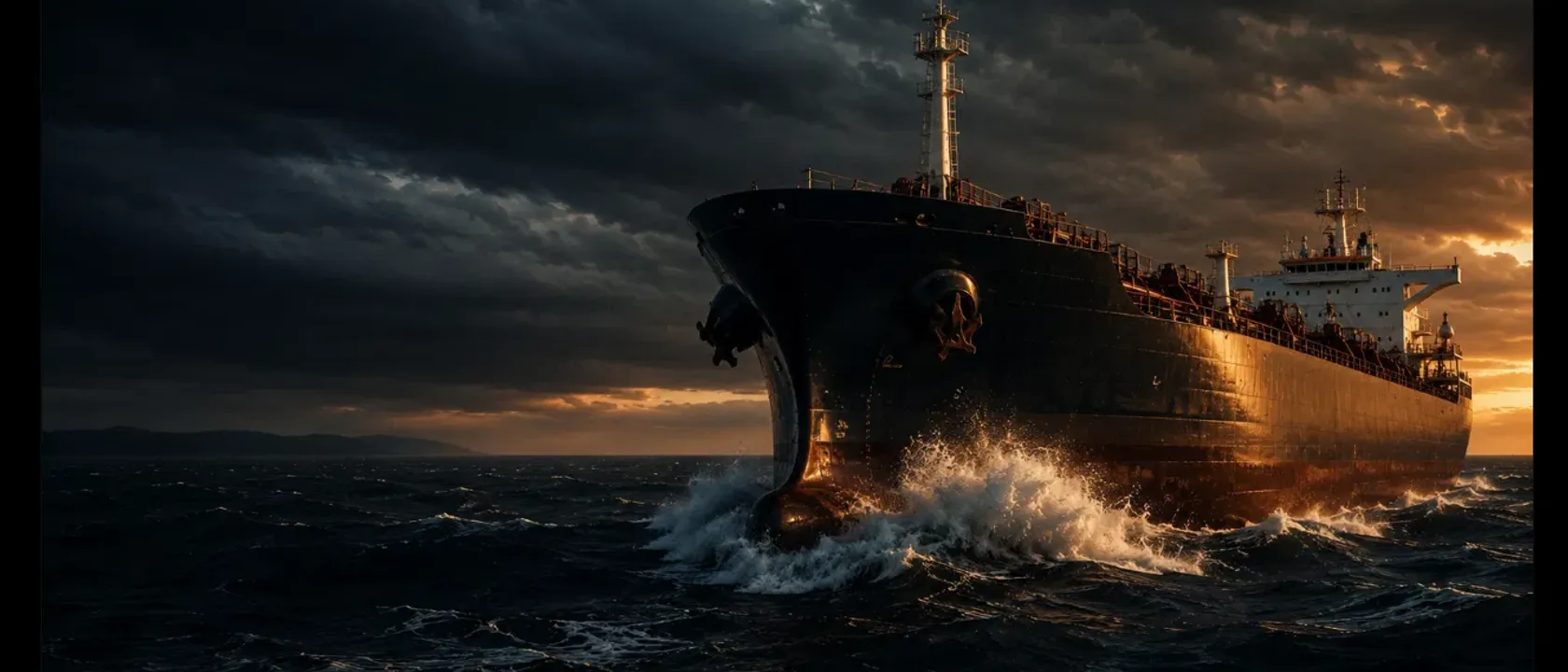
Oil markets are on fire again. Brent crude pushed above $90 a barrel this week — its highest level since mid-June — after Iran declared its ceasefire with the United States effectively collapsed, following fresh strikes on vessels attempting to transit the Strait of Hormuz and an attack on a Kuwaiti oil facility. WTI is trading near $84. For the tanker industry, this kind of volatility isn't just a headline — it's the raw material of extraordinary profits. For the eight days that killed the ceasefire and brought the blockade back, see Ceasefire Dead, Blockade Back.
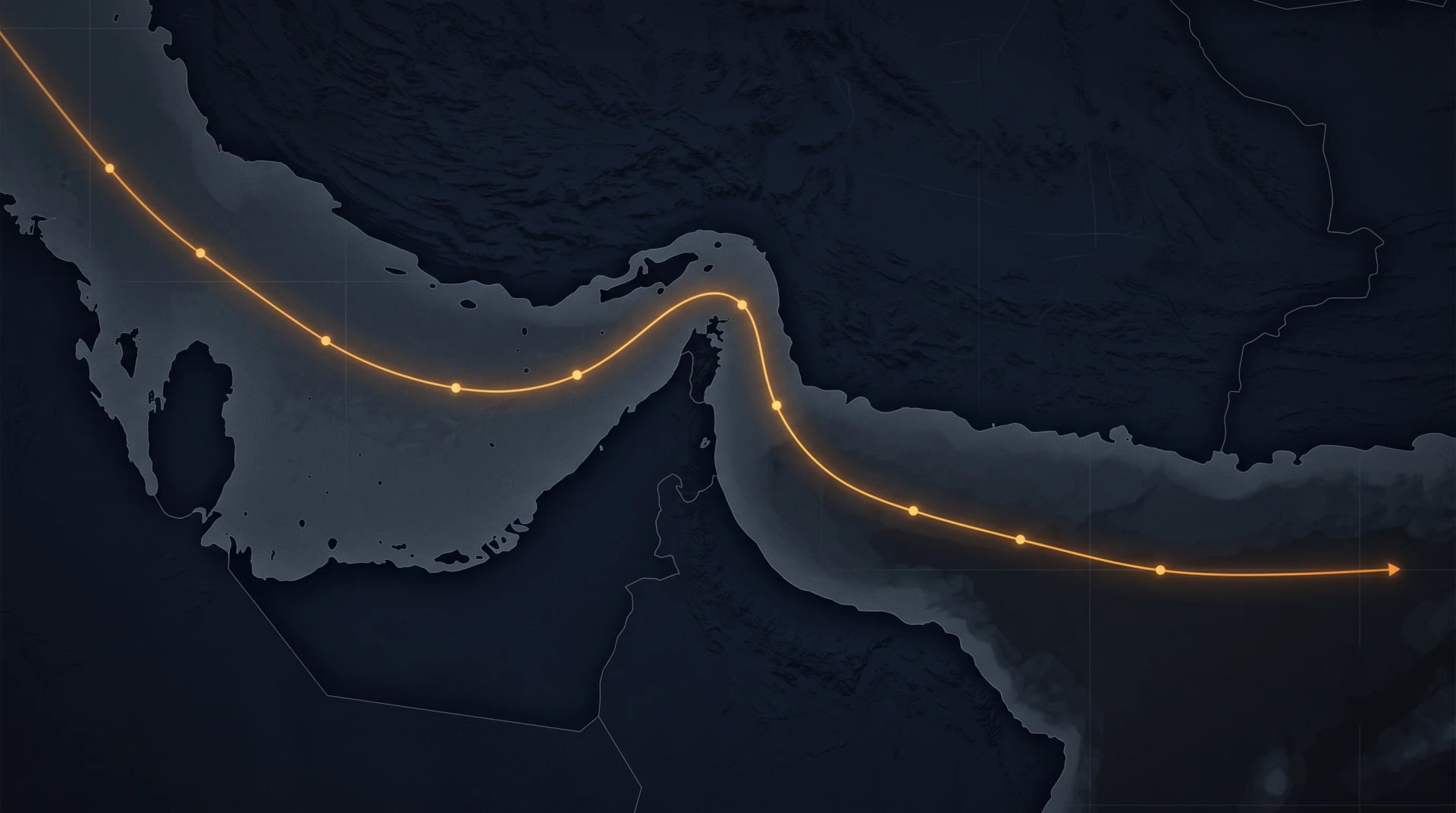
The Strait of Hormuz carries roughly a fifth of the world's daily oil supply, around 20 million barrels, from the Gulf to markets in Asia, Europe, and beyond. Every time transits through the strait are disrupted, threatened, or rerouted, the knock-on effect ripples through freight markets almost instantly. And when freight rates spike, it's tanker owners — not oil producers — who often capture the most dramatic short-term gains. That's the thesis worth examining here: geopolitical tension in the Gulf translates into higher freight rates, and higher freight rates can mean outsized returns for the companies that own and operate the ships.
The Current Situation
The past several months have delivered one of the most severe Middle East shipping disruptions in decades. Commercial traffic through Hormuz has been sharply curtailed since the initial escalation, with reports of an over 90% drop in vessels willing to transit the strait at the peak of the crisis earlier this year. Major war-risk insurers pulled back cover for the Persian Gulf entirely at various points, and premiums that once sat around a quarter of a percent of hull value have, at times, jumped into the 3–10% range.
Oil prices have followed the headlines up and down all year — spiking on strikes, easing on ceasefire talk, then spiking again as those truces broke down. We mapped that earlier unwind in Oil After the Ceasefire. That volatility is precisely what keeps tanker demand elevated: uncertainty forces longer, more cautious routings, more idle time waiting outside anchorages, and continued reluctance from some owners to sail Gulf routes at all — all of which tightens available capacity.
Why Tanker Companies Benefit
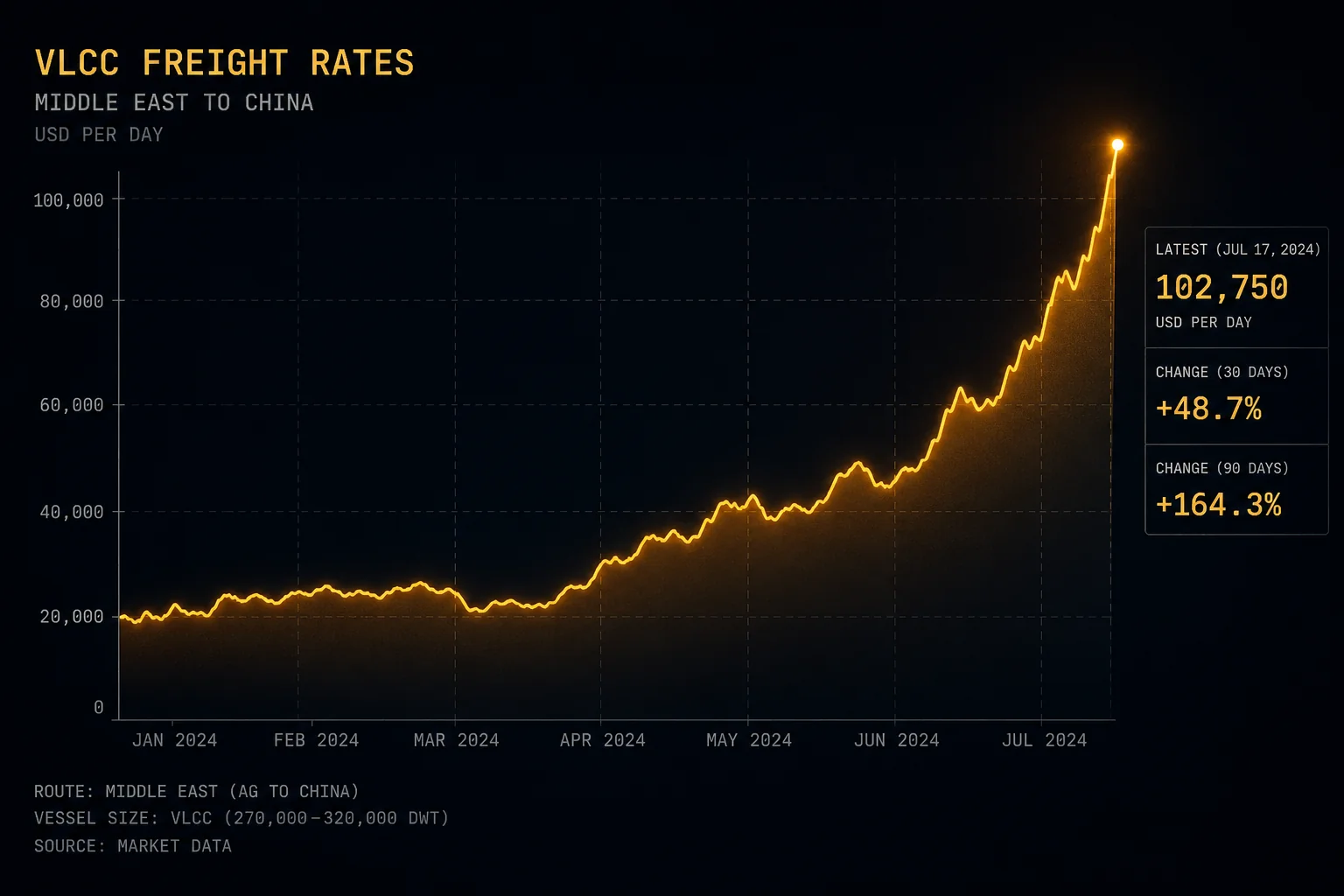
The mechanics are fairly simple. When a chokepoint like Hormuz becomes risky or partially blocked, ships either wait, divert, or demand a premium to sail through it. Very Large Crude Carrier (VLCC) rates on the benchmark Middle East–to–China route hit an all-time high above $420,000 per day earlier this year, more than double typical levels — driven by a mix of war-risk premiums, tightened available tonnage, and insurers stepping back from coverage.
Longer or more cautious routings also mean more "ton-miles" — the same barrel now travels further or takes longer to reach its destination, soaking up more vessel-days per voyage. Combine that with owners' ability to pass elevated bunker fuel and war-risk surcharges straight through to charterers, and the economics tilt heavily in the shipowners' favor during a crisis. This isn't a new pattern — tanker owners have historically been among the biggest beneficiaries of Gulf conflicts and chokepoint disruptions going back decades, precisely because the sector's cost structure is largely fixed while spot rates are free to spike. For a broader scenario map for Hormuz investors, see our earlier analysis.
Tanker Companies Investors Are Watching
Several publicly listed owners sit at the center of this story, spanning both crude and product tankers:
- Frontline (FRO) — One of the largest operators of VLCCs and Suezmax crude tankers, Frontline has posted some of the strongest year-to-date share price gains in the entire sector this year, alongside a fleet renewal strategy that signals management confidence in a sustained cycle.
- DHT Holdings (DHT) — A pure-play VLCC operator that has also seen a substantial run-up in 2026, benefiting directly from record crude tanker day-rates.
- Nordic American Tankers (NAT) — A smaller-cap Suezmax specialist that has posted comparably strong gains, though it tends to carry more volatility than its larger peers.
- Scorpio Tankers (STNG) — Focused on the product tanker side (refined fuels rather than crude), Scorpio has seen analysts sharply raise earnings estimates as LR2 and MR product tanker rates surged alongside the crisis.
- International Seaways (INSW) and TORM — Both maintain diversified crude and product fleets and are frequently mentioned alongside the names above as leveraged plays on Gulf disruption.
Analyst sentiment has been broadly positive on near-term earnings — some firms are projecting profits several times higher than last year for the sector — though dividend policies and capital allocation vary by company and are worth checking individually.
Risks & What Could Go Wrong
This trade cuts both ways, and the downside case deserves equal attention.
- A durable ceasefire. If diplomacy actually holds this time, war-risk premiums and rerouting behavior could unwind quickly, and freight rates typically fall faster than they rose.
- Fleet oversupply. Record profits are already encouraging a wave of new tanker orders. Analysts have flagged 2026–2028 as years where global tanker supply could grow meaningfully, which risks softening rates once the current disruption fades — some are already forecasting a sharp reversion in 2027.
- Demand-side drag. Sustained high oil prices can themselves dampen global fuel demand over time, working against the very tailwind that's driving freight rates higher.
- Stock-level volatility. Several tanker names have already posted 50–90% year-to-date gains, meaning a lot of the current crisis premium may already be priced in.
Takeaway
The Strait of Hormuz crisis has created genuinely unusual conditions for tanker owners — record day-rates, soaring war-risk premiums, and a market structure that rewards uncertainty rather than punishing it. Whether that constitutes a "once-in-a-decade opportunity" depends heavily on how long the disruption persists and how quickly new vessel supply catches up once it ends. As always, do your own research, size any position to the sector's well-documented volatility, and keep an eye on both the geopolitical headlines and the shipbuilding order books — the second of which tends to matter just as much as the first, only on a longer time horizon.
Follow Hormuzeye for ongoing coverage of the Strait of Hormuz crisis and its impact on oil and shipping markets.